
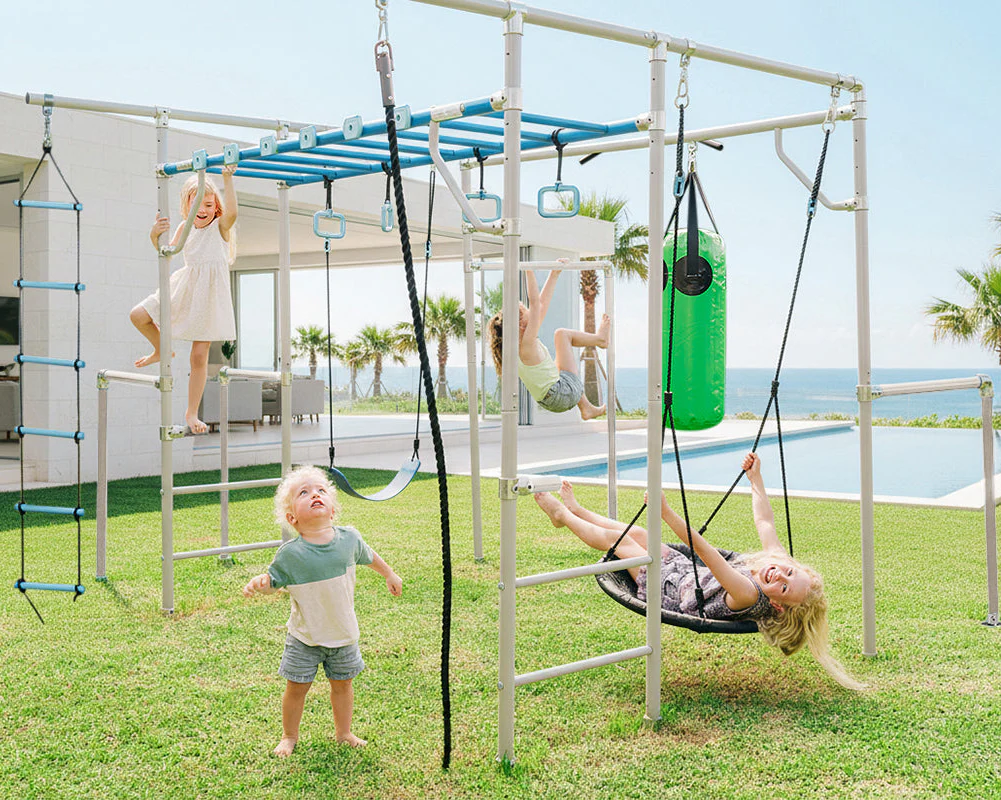

Ask most parents how they chose their current backyard play equipment, and the honest answer is usually some version of “it was the best price I found at the time.” It’s an understandable way to shop — nobody wants to overspend on something kids might lose interest in — but it’s also exactly the mindset that leads to the most expensive outcome of all: buying twice.
The sticker price of a piece of play equipment tells you almost nothing about what it actually costs a family over the years it’s meant to last. A genuinely useful way to compare options is cost-per-year of actual use, not upfront price, and once that lens is applied, a lot of “budget” choices turn out to be the more expensive option in the end.
Why Upfront Price Is a Misleading Number
A cheaper structure that needs replacing within two years because of weather damage, structural wear, or simply being outgrown too fast isn’t actually a bargain — it’s a temporary fix with a second purchase already built into its future. Meanwhile, a more expensive option that genuinely lasts six or eight years of regular use, and remains engaging across a wider age range during that time, often works out considerably cheaper per year of actual use, even though the initial number on the price tag looks larger.
The trouble is that upfront price is the only number most parents actually compare, simply because it’s the only one visible at the point of purchase. Durability, weather resistance, and age-range flexibility are all invisible until years later, which is exactly why they get underweighted in the decision.
Monkey Bars: A Case Study in Durability Mattering More Than It Looks
Monkey bars are a good example of equipment where build quality genuinely determines lifespan in a way that isn’t obvious from a quick look. The core mechanics are simple — a horizontal ladder for hand-over-hand movement — but the specific materials and construction quality behind that simplicity vary enormously between a genuinely durable structure and one that looks similar but wears out within a season or two.
Things that separate long-lasting monkey bars from short-lived ones:
- Bar diameter and grip coating that holds up to years of sweaty hands and direct sun without degrading or becoming slippery
- Frame gauge and joint welding quality, which determines whether the structure stays rigid under years of dynamic swinging load or gradually develops play and wobble
- Corrosion resistance at ground-contact points, since this is where cheaper structures typically fail first, often well before the rest of the equipment shows any wear
- Height and spacing genuinely suited to the age range intended, since equipment that’s uncomfortable to use gets abandoned regardless of how well-built it is
Comparing a properly built range of monkey bars against a like-for-like budget alternative, factoring in expected years of actual use rather than just the shelf price, usually reveals a considerably better cost-per-year outcome from the sturdier option — even though it costs more to buy on day one.
Jungle Gyms: Where Modularity Pays for Itself Over Time
Jungle gyms are one of the clearest examples of equipment where the ability to expand or reconfigure over time changes the entire cost equation. A fixed, single-configuration structure delivers whatever play value it has on day one and stays exactly that way for its entire life — whereas a genuinely modular jungle gym can be added to as budget allows and as kids’ abilities develop, spreading cost over several years while extending the useful life of the original investment rather than requiring a full replacement.
This matters in practical terms because kids’ interests and physical abilities change considerably over a two-to-four-year window, and equipment that can grow alongside that development avoids the common trap of a structure feeling “solved” or outgrown well before it’s actually worn out. Looking through a properly modular range of jungle gyms — rather than a single fixed-configuration unit — tends to produce a much better long-term value outcome, since the initial purchase becomes the foundation for future additions rather than a dead end.
Toddler Swings: The Equipment Most Likely to Be Bought Twice
Toddler swings are, ironically, one of the categories where parents most often end up buying twice — once for a genuinely toddler-appropriate seat, and again a year or two later once that seat is outgrown but a full-size swing seat isn’t yet appropriate or safe. This gap gets expensive fast if it isn’t planned for from the outset.
The better approach is choosing a swing system designed around this transition specifically, rather than treating a toddler seat as a standalone, disposable purchase:
- Seats that can be swapped on the same frame as a child grows, rather than requiring an entirely new structure
- Secure harness design genuinely rated for the toddler stage rather than a scaled-down version of an older child’s seat
- Frame height and chain length suited to a realistic multi-year window, not just the exact dimensions of a two-year-old
Reviewing a properly designed range of toddler swings built with this transition in mind — rather than a standalone toddler-only product — tends to avoid the double-purchase trap entirely, since the same frame carries a family through several years rather than one narrow age window.
Doing the Actual Cost-Per-Year Maths
For families genuinely trying to compare options rationally rather than just by sticker price, a simple framework helps:
- Estimate realistic years of use — not the maximum theoretical lifespan claimed by a manufacturer, but how long a typical family would actually keep using the equipment given how kids’ interests shift
- Divide the purchase price by that number to get a genuine cost-per-year figure, rather than comparing raw upfront prices
- Factor in any expected repair or replacement costs within that period, particularly for lower-quality options prone to earlier wear
- Compare that adjusted figure across options, rather than defaulting to whichever number looks smallest on the initial price tag
Run through this exercise honestly, and a lot of “cheaper” options turn out to cost more per year of actual use than a pricier, better-built alternative — simply because they don’t last as long or get outgrown sooner.
Conclusion
The instinct to shop on upfront price is understandable, but it’s rarely the number that actually determines value in backyard play equipment. Durability, age-range flexibility, and modularity all affect the real cost of a purchase over the years it’s genuinely used, and factoring those in — rather than comparing sticker prices in isolation — usually points towards a different, better-value decision than the cheapest option on the shelf.
Spend a little more time doing the cost-per-year maths before buying, and the equipment that initially looked like the pricier option often turns out to be the genuinely cheaper one in the end.
Comments are closed.