
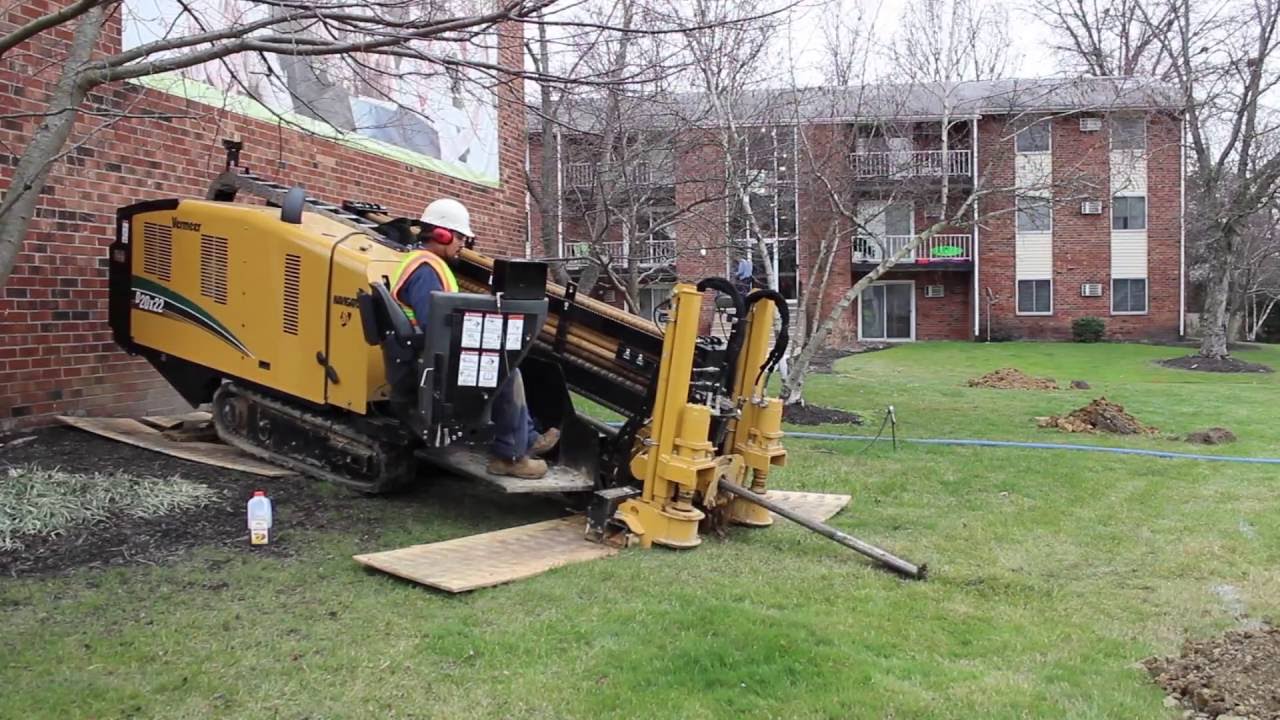

Directional drilling, particularly Horizontal Directional Drilling (HDD), is a trenchless technique used for installing underground pipes, conduits, and cables with minimal surface disruption. This method has gained prominence due to its efficiency, cost-effectiveness, and reduced environmental impact compared to traditional open-cut methods. It provides solutions for underground infrastructure installation and repair in both urban and rural settings.
The Core Principles
The fundamental principle behind directional drilling is to accurately steer a drill head along a predetermined underground path. This is achieved through a combination of techniques:
- Pilot Bore Steering: The initial bore is crucial. A small-diameter drill head, connected to a drill string, is advanced into the ground. Its direction is controlled by adjusting the angle of the drill head. This is often done using a bent sub or an articulated drill head. The drilling fluid, typically a mixture of water and bentonite, lubricates the drill head, stabilizes the borehole, and removes cuttings.
- Tracking and Guidance: Accurate tracking of the drill head’s position is essential. This is achieved using various methods, including wire-line systems that provide real-time data on the drill head’s depth, inclination, and azimuth.This data allows the operator to make necessary steering corrections.
- Reaming: Once the pilot bore reaches the desired exit point, it’s enlarged through a process called reaming. A reamer, which is a larger diameter cutting tool, is pulled back through the pilot bore, increasing its size to accommodate the product pipe or cable. This process may be repeated with progressively larger reamers.
- Product Pullback: The final stage involves pulling the product pipe or cable back through the enlarged borehole. A swivel is used to connect the product to the drill string, preventing it from rotating during the pullback. The drilling fluid continues to play a vital role in lubricating the borehole and facilitating the smooth installation of the product.
Key Factors Influencing Directional Drilling
Several factors influence the success of a directional drilling operation:
- Geology: The type of soil or rock encountered significantly affects drilling parameters, such as drilling fluid composition, drill head selection, and drilling speed.
- Depth and Distance: The depth and length of the bore influence the equipment requirements, tracking methods, and the overall complexity of the operation.
- Obstacles: Existing underground utilities, waterways, and other obstacles require careful planning and precise steering to avoid damage or disruption.
- Accuracy: Maintaining the planned trajectory is critical. Advanced guidance systems and experienced operators are essential for achieving the required accuracy.
Advantages of Directional Drilling
- Minimal Surface Disruption: Reduces the need for extensive excavation, minimizing disruption to traffic, businesses, and the environment.
- Cost-Effectiveness: Can be more cost-effective than traditional methods due to reduced reinstatement costs and faster project completion times.
- Versatility: Suitable for a wide range of applications, including installing various types of pipes and cables in diverse environments.
Applications
Directional drilling is employed in various scenarios, including:
- Installing utilities under roads, railways, and other infrastructure in urban areas.
- Crossing rivers, canals, and other waterways.
- Installing pipelines in environmentally sensitive areas.
- Long-distance pipeline installations.
Comments are closed.